
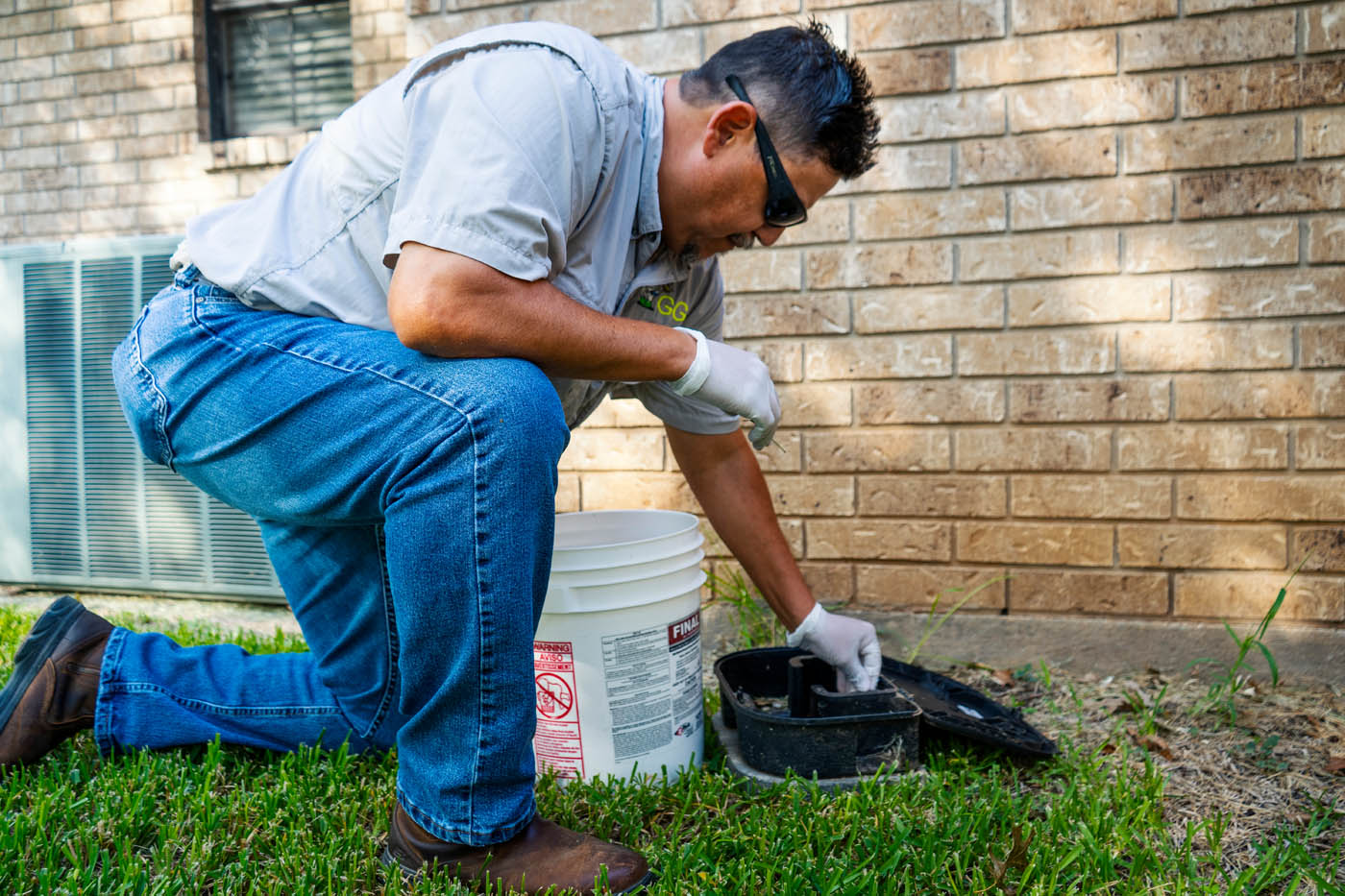

Save on Your First Service!
See Offers

Save on Your First Pest Control Service

Save on your initial pest control service with our exclusive online discounts. Mention promos when scheduling your appointment online or to the customer service rep to redeem.

$50
Off Your First Service
Expires March 31, 2026

New customers only. Offer applies with a recurring service plan.

$100 OFF
Termite Control
Expires Aug 31st, 2026
$50 OFF
Fire Ant Control
Expires Aug 31st, 2026
$25 OFF
Rodent Control
Expires Aug 31st, 2026
GGA Pest Management guarantee badge.

GGA Blog

Explore expert tips and insights on effective pest control solutions with the GGA Pest Management Blog.

It�s big and exotic � the wolf spider

October 5, 2015

It's big and exotic - the wolf spider Typically these creatures are found at night in south western desert regions. They are nocturnal and feast on beetles and other insects. However, if bitten by one, a human can experience the same symptoms of a nasty hornet's sting. The wolf spider is known to overpower its prey by releasing a venomous bite that paralyzes. They love a strong base of grasshoppers, beetles and other smaller spiders. They are like most spiders in the way they will hunt. They come out at night in search of food. They have eight eyes total, 2 larger ones in the front. They also have six smaller eyes on the sides of its head. The larger eyes have better ability to focus in on prey while the smaller eyes tend to find light sources. Their bites are not deadly to humans, but that doesn't deem them non dangerous. If given the opportunity to bite children or elderly whose skin hasn't become very tough, the spider can bite fully through causing pain and a lot of irritation. If you think you have a problem with wolf spiders in your home, you should call a local pest control company to come evaluate and come up with a strategy on how to treat the issues. For more information on wolf spiders, please click here

Return to sender

October 2, 2015

Return to sender What would you do if you received a package, marked return to sender, only to find a very large and very aggressive tarantula inside? This happened to a homeowner recently and left him stunned. When the homeowner received a package addressed to the previous tenant, he decided to open it only to find the third largest spider in the world held captive. It is estimated the Brazilian Salmon Pink Birdeater was alive in the now moldy container for up to three weeks. He decided to take it to the vet because it was such a rare find. This species of tarantulas are known to have inch long fangs, and have the ability to kick hairs from their abdomens that could cause human blindness. This particular spider was very unhealthy at the time the vet examined it. After three weeks of circulating through the postal service and being exposed to mold, it was very dehydrated and was suffering from hair loss on its stomach. As a blanket statement, tarantulas are usually docile and non-aggressive. They can be beautiful to watch as they move and some people even choose to keep them as pets. This species however is very dangerous and thankfully, for all those involved, this story has a happy ending and no spiders or humans were harmed in the end. For more information on tarantulas, please click here

Grass to keep away mosquitos?

September 25, 2015

Grass to keep away mosquitos? The idea is something we have never heard of. Researchers are now testing the chemicals and oils in sweet grass to determine if it is as effective as chemical pesticide. These scientists have already determined that there are two chemical compounds work as repellants. The sweet grass grows long and is commonly used for basket weaving. Reports from harvesters of the grass report that there is not a mosquito population around the grass. Native American tribes also report that they use the sweet grass in their homes to keep mosquitoes away. Their next study is to determine if the chemical found in the sweet grass is just as effective as popular insecticides like deet. If they can prove the chemical found in sweet grass deters mosquitos just as effectively, with less poisons and harmful chemicals, they may have broken ground on the future of pesticide. Mosquitoes are problematic because they carry West Nile and Yellow Fever, to diseases that have the potential to be fatal. A new solution to mosquitos can't come quickly enough as they adapt to their environment and can create an immunity to the chemicals we currently use. For more information on keeping mosquitos away, click here

Stop them in their tracks | Waco Ant Control

September 23, 2015

Stop them in their tracks How can we combat invasive ants? Researchers may have found the solution. Invasive ants can take over your home in no time. They are annoying and will leave you covered in bites once they feel you are attacking their new home. Scientists however have found a virus that can infect aggressive invasive ants and stop them in their tracks. One species, the argentine ant, is known to form super colonies. They merge with other ant colonies to take over any given area. They are extremely aggressive and stop at nothing to conquer their territory. Instead of fighting other ant colonies, they work together. Scientists have said a virus like this one, could be what is happening to our bee population as well. The ants carry the virus back to their queen and eventually as it takes its course, the entire colony is dead. This virus could be very beneficial in stopping ants from intruding on areas they are not welcome, and scientists believe they can use it as a tool that keeps these aggressive ants in check. Ants love sticky substances, and will carry food 20 times their own body weight back to their nest. They typically work together to sustain their colony and they can be a handful to get rid of. For more information on ants, please click here

Get out you pesky ants! | Waco Ant Control

September 21, 2015

Get out you pesky ants! How do I keep them away! They are more annoying than the majority of other insects and household pests. What are they? Ants. They make a feast on our leftovers during the summer months, invading our sugar bowls and anywhere else they can find a food source. Here are some things you can do at home to help keep them at bay while you wait for your pest control company to arrive. Vinegar and its pungent scent will keep them from entering the house if you take the time to spray down the entry ways and any gaps you find. Black pepper will do the trick as well. Turns out these ants aren't keen on the spice. Because ants use their sense of smell to maneuver, anything you can do to mess this up is a benefit. For instance, you can also place a mint plant or cinnamon sticks and citrus peels near entry ways to confuse them. These items all smell like some of their favorite things, but when the ants smell the aroma but find no food source, they will become confused and go away. Of course there is also the dreaded bug spray, but if you think you have an ant problem, it is always best to call your local pest control expert for help. For more information on ridding your home of ants, click here

How do I treat a mosquito bite?

September 18, 2015

How do I treat a mosquito bite? Camping, fishing, hiking and outdoor exploring can leave you open to mosquito bites. After all you are now in their home, on their territory. Mosquito bites are so common, some people have a built up immunity from their effects. Although the majority of bites are minuet, some can be painful, especially in the situation if they get infected. You can keep a bite site clean and help to avoid infection by not scratching. The most important thing to remember is that the itch is pretty much the worst part of the bite. If you scratch it, you create an open wound that later can get infected thereby actually making the problem worse. Try washing the skin with antibacterial soap and water, and then place ice directly on the bite to reduce the itch and reduce the swelling. If you have anti itch cream, apply that to the site. If you don't have any some common household products that can help are aloe Vera or make a paste of baking soda and water. You can reduce your small children's discomfort and also can reduce scratching by applying a band aid to the affected area. The most important thing to remember is not to scratch. For more information on mosquitos please click here

It�s a bird! It�s a plane! It�s a �.. SPIDER?

September 16, 2015

It's a bird! It's a plane! It's a �.. SPIDER? Flying spiders? WHAT! Spiders don't fly! Of course they don't, but some appear to be gliding which is a feat for such a small insect that doesn't have wings. Researchers in the rainforests of Panama and Peru have researched and documented the instances of spiders appearing to fly and are astonished. Spiders are typically nocturnal and lay flat in the bark in the rainforest. The species called Selenops are large at three inches wide, but remarkably thin at less than one sixteenth of an inch thick. With dimensions like that, they are not at all naturally aerodynamic. The researchers collected nearly 60 spiders and released them from the tops of the trees in the rainforest. Nearly all of them literally glided down to land on tree trunks standing nearby. They noticed upon release, the spiders would automatically turn their body facing their heads towards their intended landing spot. It was also observed that they seem to use their front legs to steer themselves in the right direction while gliding. One of the important parts of this research is the realization that these spiders are not just free falling from a silky web like most will do to cascade through the air. They are gliding with no cords or parachutes. Almost like a free fall if you will. For more information on flying spiders click here

Ghost Ants!

September 14, 2015

Are you being watched? Do you have that gut feeling that something is out there spying on you? Maybe just in the shadows or behind the baseboard? Ghost ants might be your answer. While they may have an eerie name, they aren't really scary. It's their small size and pale, ghostly color that gives them their name. This also make it difficult to see so they may just surprise you! Would you call a black widow spider a war hero? If you answered "yes", than you may already know that the black widow spider web was used to mark targets in World War ll. Have you ever seen a flying squirrel? They don't really fly, but rather glide. They have a fold of skin that when stretched out becomes their own personal sail. While this may be a cool skill, they can become pests if they gain access to your attic. The smell alone will let you know they are visiting. Don't attempt to remove them yourself, as they are biters. Be sure to call a professional. Did you know that a cricket eats both plants and animals? You do now! Bed bugs love blood. So much in fact that they can consume up to seven times their own body weight. It's easy to spot when they have been snaking because their bodies will turn bright red in color. All it needs is a warm blooded body and opportunity. The fact that humans aren't covered in fur makes us their favorite. For more information on ghost ants, black widow spiders, crickets and bed bugs click here

Different Stingers

September 11, 2015

Different Stingers Do you know the difference between and wasp, hornet and bee? Missy Henriksen has some answers and some tips on how to avoid them. A wasp is slender and generally not aggressive. They will however sting if messed with or when threatened. The will also gaurd their nest so beware trying to remove one. You will usually find the nest up high in trees or under eaves for instance. Do not attempt to remove the nest. You should call for professional treatment and removal. Hornets will come out later in the summer. They look much like a wasp, but their aggression is quite different. Walk into their space? Be prepared to get stung! Hornets can also sting multiple time and the stings can be very painful. If a nest is spotted in a tree or by your house do not attempt to remove it. Again, call a professional. You can spot Honey bees around your gardens and plants as they are natures pollinators. Usually living in hollow trees and in colonies. Bumble bees are much larger and usually nest in the ground. They also have the ability to sting more than once. Carpenter bees are similar to bumble bees, but are less aggressive. They seldom sting, but can do damage to wood if not controlled. Remember if you do encounter these stinging pests, don't swat at them or provoke them in any way.

Learn More About GGA Pest Management:

Schedule Your Free Inspection Today

We Defend Against the Following Pests and More: